
There is a particular kind of false confidence that settles over Cape Town business owners somewhere around March and April. The summer crowds have thinned. The festive season crime wave is a memory. The pace slows down and, with it, so does the instinct to think critically about security. It feels like a good time to coast.
That feeling is precisely what makes autumn one of the most dangerous seasons for business security in Cape Town, and one of the least discussed.
With Cape Town’s rainy season arriving between May and August, bringing shorter days, reduced natural surveillance, storm-damaged perimeters, and a documented spike in property crime, the businesses that are most vulnerable are not the ones without security at all. They are the ones running on a security guard service that was set up for a different season and never reviewed.

Have you asked yourself: is my current security guard service ready for what winter brings?
The Problem Cape Town Businesses Do Not See Coming
If you run a business in Cape Town, you are probably more focused on summer crime than on what happens in the months that follow. That is understandable. Summer brings higher foot traffic, festive season retail surges, and a well-documented spike in business break-ins and robberies. Security guard services are reviewed in October. Contracts are beefed up in November. Everyone is paying attention.
Then April arrives and attention drifts.
But here is what the data tells us. Property crime, including business burglaries, housebreaking, and malicious damage to property, is proportionately more active in winter months globally, and Cape Town is no exception to that pattern. While violent crime tends to peak in warmer months when people are out socialising, opportunistic property criminals prefer the cover of longer nights, reduced foot traffic, and compromised visibility.
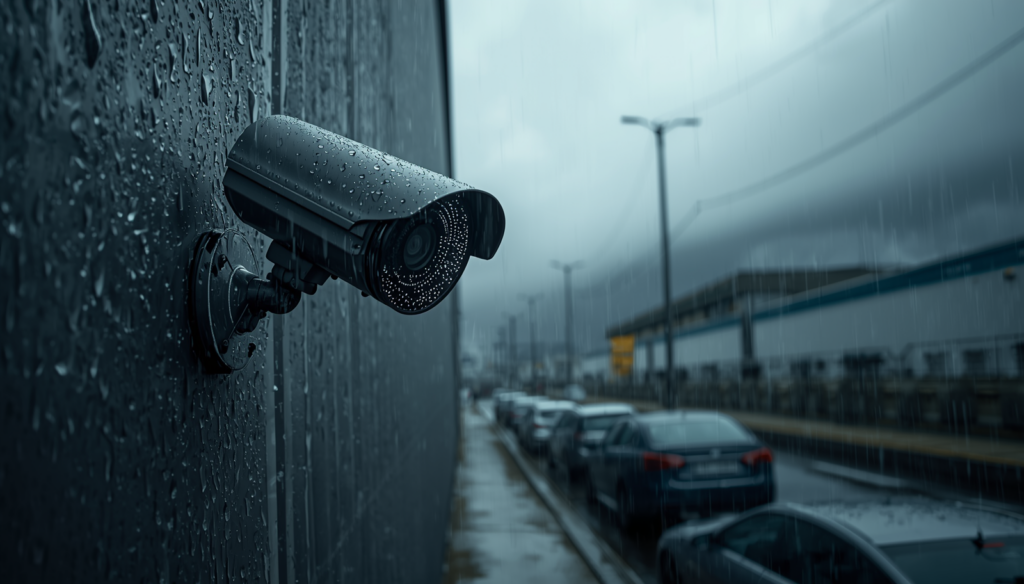
Cape Town’s winter does all three. From May, the city’s days shorten significantly. Businesses are locking up in near-darkness. Perimeter lighting, already stretched after a full summer of use, starts to fail. Heavy winter rains reduce the effectiveness of CCTV cameras, particularly older or poorly positioned units that fog up, collect water streaks, and lose the clarity they rely on to deter crime. Stormy conditions damage fencing and gates. A gate that does not close properly after a winter storm is an open invitation.
And then there is the human factor. Cape Town’s homeless population, which increases its presence in sheltered commercial areas during winter, creates additional access control and property protection challenges for businesses that were not designed to manage that kind of perimeter pressure.
The result is a security gap that opens quietly, without dramatic warning signs, in the weeks between the end of summer and the first serious winter storm.
For businesses operating without a current, seasonally reviewed security guard service, that gap is not theoretical. It is a matter of when, not if.
What It Costs When You Do Not Act Before Winter
Let us be direct about what is at stake, because the costs of an under-resourced or seasonally outdated security guard service are not abstract.
Consider a commercial property in Milnerton, Parow, or Montague Gardens. After a night of heavy rain, the electric fence at the rear of the property loses power following a circuit fault. The gate motor, which has been stiffening since early March, finally jams shut rather than open. The security guard on duty is posted at the front entrance, unaware, because no one reviewed patrol routes or perimeter reporting protocols since last winter.
A break-in costs that business R250,000 in tools and equipment overnight. The insurance company reviews the claim and finds that the security setup was outdated and not adapted to known seasonal conditions. The claim is partially denied. The business absorbs a loss it was not financially prepared for.
This is not a hypothetical. This is a composite of exactly the kinds of incidents that occur across Cape Town’s commercial and industrial precincts every winter, most of which never make the news.
Beyond the direct financial loss, there are downstream costs that are harder to quantify but equally damaging. Staff who experience a break-in or who feel unsafe in their working environment report higher anxiety, lower productivity, and, in some cases, attrition. The emotional cost to a small or medium business of losing a key employee because they no longer feel safe is significant. Customers who arrive at a business with broken fencing, a damaged gate, or signage that has been vandalised do not always know the backstory. They just see a property that looks uncared for, and that perception does damage.
There is also the legal and compliance dimension. South Africa’s Private Security Industry Regulatory Authority, known as PSIRA, sets standards for how security guard services must operate. Businesses that deploy guards who are not properly registered, trained, or managed under a compliant company do not just risk poor security outcomes. They risk legal exposure. Winter is when complacency about contractor compliance tends to set in. Months after signing a contract, no one is asking the hard questions about whether the guards on site are still current on their certifications, still being properly supervised, and still operating under a site-specific plan that reflects current risk conditions.
The cost of not reviewing your security guard service before winter is not just the next break-in. It is the cumulative weight of missed compliance, declining deterrence, staff morale erosion, and insurance vulnerability building quietly behind a locked and probably slightly broken gate.

Get Winter-Ready
Reviewing your business security guard service before winter does not need to be a major project. It needs to be a systematic one. Here is a practical framework that any Cape Town business can apply.
Review your perimeter for seasonal vulnerabilities.
Walk your property boundary with fresh eyes in April, before the rain and wind start to do their work. Look for fence sections that have shifted, gate motors that are slower than they should be, motion-sensor lights with blown bulbs, and CCTV cameras that are angled in ways that worked in summer but will be obscured once rain hits. Note every vulnerability and ensure your security guard service provider is briefed on each one.
Audit your access control records.
Winter brings a different mix of people around commercial properties. Contractors and delivery schedules change. Foot traffic from adjacent areas shifts. Ask your security guard service provider to review and update access control logs, visitor management protocols, and any biometric or keycard systems attached to your premises. Outdated access lists are a winter risk that most business owners simply do not think about.
Check guard deployment against winter hours.
If your current security guard services contract was written with summer or spring trading hours in mind, the shift times, patrol schedules, and post assignments may not align with winter darkness. A business that closes at 5:30pm in December is closing into full daylight. The same business closing at 5:30pm in June is closing into near-darkness. That change in light exposure is a material change in risk, and your deployment plan should reflect it.
Verify PSIRA compliance before winter begins.
Ask your security guard service provider for current PSIRA registration documentation for all guards assigned to your site. Do this now, not after an incident. A reputable company will provide this without hesitation. One that stalls or deflects is telling you something important about what you can expect in a crisis.

Establish a winter incident communication protocol.
Know in advance what happens when something goes wrong at 2am during a winter storm. Who calls whom? What is the response time commitment? Does your security guard service provider have standby personnel available for storm damage response? Is there a 24-hour control room you can reach directly? These questions are easy to ask in April and very difficult to navigate in June when you are on the phone in the dark.
Why the Right Security Partner Makes All the Difference
There is a significant difference between a security guard service that provides warm bodies for a gate and one that provides a managed, adaptive security solution that actually protects your business through every season.
A professional and reputable security guard company brings three things to this challenge that you cannot replicate on your own.
The first is experience across seasonal risk patterns. A company with deep roots in Cape Town’s commercial security landscape has seen what winter does to properties that were not prepared. That institutional knowledge translates into proactive advice, not reactive billing after something goes wrong.
The second is a managed service model. With a managed security guard service, you are not just hiring a guard. You are engaging a company that oversees that guard’s training, attendance, conduct, and performance. Supervisors inspect the site. Control rooms monitor activity. Standby personnel are available when a guard calls in sick during a winter storm. That layer of management is what separates a professional operation from a freelance arrangement that leaves you exposed.
The third is compliance and accountability. A reputable security guard company in Cape Town operates under PSIRA registration, maintains up-to-date guard certification, and carries the appropriate indemnity and liability coverage. When something goes wrong, which it can even with the best security in place, you are working with a partner who has professional standing and documented accountability rather than a contractual grey area.
SAS Security Services has been delivering managed security guard services to Cape Town businesses for over 30 years, across commercial properties, construction sites, retail centres, and industrial yards. The company brings the kind of experience and operational depth that turns autumn’s quiet risk window into an opportunity to get ahead of winter before it gets ahead of you.
A site assessment and security guard service review before winter begins is not a bureaucratic exercise. It is one of the most practical, cost-effective decisions a Cape Town business can make in April or May. If your current contract has not been reviewed in the last six months, now is the time.

Frequently Asked Questions
- Does property crime actually increase during Cape Town’s winter months?
Yes, and the pattern is well-documented. While violent and contact crime in South Africa tends to peak in warmer months, property crime such as business burglaries, housebreaking, and theft from premises is proportionately higher in winter. Longer periods of darkness, reduced foot traffic, stormy conditions that compromise perimeter infrastructure, and lower natural surveillance all create conditions that opportunistic criminals favour. For Cape Town businesses, the May-to-August window represents a genuine risk elevation that a well-managed security guard service needs to be specifically prepared for.
- How do rainy conditions affect security guard patrols and CCTV effectiveness?
Rainy and stormy conditions create several specific security challenges. CCTV cameras lose visual acuity when rain hits lenses or causes fogging, particularly on older or uncovered units. Perimeter lighting can fail after circuit exposure to water. Fencing and gate systems are vulnerable to storm damage. For security guard patrols, wet conditions affect visibility on foot and can make it harder for guards to identify perimeter breaches quickly. A professional security guard service will adapt patrol routes, increase check-in frequency, and deploy rain-specific protocols to maintain coverage during poor weather.
- What should I look for when reviewing my security guard service before winter?
The key areas to review are perimeter integrity, guard deployment schedules relative to winter trading hours, CCTV camera placement and condition, access control records, PSIRA compliance documentation for all deployed guards, and your incident response communication protocol. A reputable security guard company will conduct a site assessment with you as part of this process. You should also verify that your current contract includes standby guard provisions for unexpected absences and that a 24-hour control room is accessible.
- How do I know if my current security guard service is PSIRA-compliant?
Ask your security guard service provider directly for the PSIRA registration certificate of the company and the registration documents of all guards currently deployed at your site. PSIRA registration is a legal requirement in South Africa, and any company that cannot produce this documentation on request should be treated with serious caution. You can also verify registration directly through the PSIRA website. A reputable company will welcome compliance questions and provide documentation without delay.
- Is it worth upgrading my security guard service in winter, or should I wait until summer?
Waiting until summer to review and upgrade your business security guard service is exactly the approach that leaves businesses exposed during their most overlooked risk window. Winter in Cape Town brings specific and predictable security vulnerabilities. The right time to address them is before they materialise, not after a break-in, a compliance incident, or a failed insurance claim. A security guard service review in April or May takes far less time and resource than managing the consequences of a winter security failure. The cost of being proactive is always lower than the cost of being reactive.
Ready to get your Cape Town business winter-ready before the rains arrive? Contact SAS Security Services today for a comprehensive security guard service review and site assessment. Over 30 years of protecting Cape Town businesses through every season.
Discover top security guard companies in Cape Town and earn how to choose the right one: read our recent article here…