
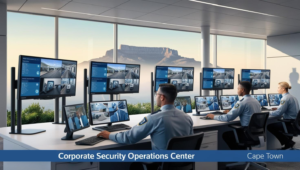
In the shadow of Table Mountain, Cape Town’s security landscape is undergoing a remarkable transformation. The integration of artificial intelligence (AI) with traditional security guard services isn’t just changing how we protect properties – it’s revolutionizing the entire security industry. As a journalist who has spent the last decade covering technological advancements in South Africa’s security sector, I’ve witnessed firsthand how this evolution is reshaping the way security companies operate in the Mother City.
The Dawn of Intelligent Security
The security industry has long relied on the vigilant eyes and quick thinking of security guards. However, the introduction of AI-powered surveillance systems has created what industry experts are calling a “security renaissance” in Cape Town. These systems aren’t replacing security guards; instead, they’re augmenting human capabilities in ways that were once confined to science fiction.
The Numbers Tell the Story
Recent statistics from the Security Industry Alliance of South Africa reveal compelling data:
- Properties utilizing AI-enhanced security guard services report a 47% reduction in security incidents
- Response times have improved by an average of 3.5 minutes
- False alarm rates have dropped by over 70%
- Security companies have seen operational efficiency increase by up to 35%
The Synergy of Human and Machine
What makes this technological integration particularly fascinating is how it complements rather than competes with traditional security guard services. Dr. Sarah van der Merwe, a security technology researcher at the University of Cape Town, explains: “The combination of AI surveillance and trained security personnel creates a security ecosystem that’s greater than the sum of its parts. While AI excels at constant monitoring and pattern recognition, security guards provide crucial human judgment and intervention capabilities that no machine can replicate.”
Real-World Applications
In Cape Town’s bustling business districts and residential areas, this synergy is already proving its worth:
Enhanced Monitoring Capabilities
Security guards now have access to AI systems that can simultaneously monitor hundreds of camera feeds, instantly flagging suspicious activity. This capability has transformed how security companies approach large-scale property protection.
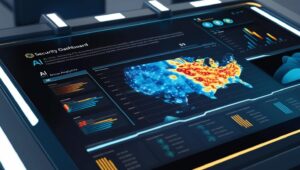
Predictive Security
AI algorithms analyze historical data to predict potential security threats, allowing security guards to proactively patrol high-risk areas during vulnerable times.
Intelligent Access Control
Facial recognition and behavioral analysis technologies work alongside security guards to provide more robust access control, particularly in high-security facilities.
The Implementation Challenge
While the benefits are clear, implementing AI-enhanced security systems presents unique challenges for Cape Town’s security companies. The initial investment in AI technology is significant, but we’re seeing returns not just in improved security outcomes but in client satisfaction and operational efficiency.
Key Implementation Considerations
1. Training and Adaptation
Security guards require specialized training to effectively utilize AI systems. This includes:
- Understanding system capabilities and limitations
- Interpreting AI-generated alerts
- Managing the human-machine interface
- Maintaining situational awareness while utilizing technology
2. Regulatory Compliance
South African privacy laws and security regulations play a crucial role in implementation. Security companies must navigate:
- POPIA compliance for data collection and storage
- Proper documentation and reporting procedures
- Employee privacy considerations
- Client confidentiality requirements
The Cost-Benefit Equation
While the initial investment in AI security technology can be substantial, the long-term benefits are compelling:
Financial Benefits
- Reduced incident-related costs
- Lower insurance premiums for protected properties
- Decreased false alarm response costs
- Optimized staff allocation
Operational Benefits
- Enhanced coverage capabilities
- Improved response accuracy
- Better resource allocation
- Comprehensive security documentation
Future Implications
The integration of AI with security guard services in Cape Town is just beginning. Industry experts predict several emerging trends:
1. Advanced Integration
Future systems will likely incorporate:
- Drone technology for aerial surveillance
- IoT sensors for environmental monitoring
- Advanced behavioral analytics
- Seamless mobile integration for security personnel
2. Customized Solutions
AI systems will become more adaptable to specific security needs:
- Retail-specific security protocols
- Residential community monitoring
- Industrial facility protection
- Event security management
The Human Element Remains Critical
Despite these technological advances, the role of security guards remains paramount. AI is a tool, not a replacement. The judgment, interpersonal skills, and physical presence of security guards are irreplaceable aspects of effective security services.
A New Era of Security
The transformation of security guard services through AI integration represents more than just technological advancement – it’s a fundamental shift in how we approach security in Cape Town. As this technology continues to evolve, security companies that successfully blend human expertise with AI capabilities will lead the industry forward.
For property owners and businesses in Cape Town, this evolution means access to more effective, efficient, and comprehensive security solutions. The future of security lies not in choosing between human guards or technology, but in leveraging the strengths of both to create robust, intelligent security systems that keep our city safe.
If you’re interested in discovering the role of advanced surveillance technologies in security services, read our recent article here…